Chapter 5: Karbala — The Desert That Changed Islamic History
As the caravan approached Karbala, the governor عبيد الله ibn Ziyad tightened control over the region. Orders were sent. Roads were blocked. Fear spread through Kufa. Many who had once promised support to Hussain RA fell silent under pressure and terror.
THE BRIEF HISTORY OF ISLAM!
Danish Shafiq
6/18/20266 min read
Chapter 5: Karbala — The Desert That Changed Islamic History
The deserts of Arabia had once echoed with the voice of Prophet Muhammad ﷺ.
Men who had once buried their daughters alive had become protectors of justice. Tribes that had fought endless wars had bowed together before One God. Within a few decades, Islam had transformed scattered desert clans into a civilization stretching across continents.
But history often tests great nations not only with victory… but with heartbreak.
Only a few decades earlier, the deserts of Makkah and Madinah had witnessed the footsteps of Prophet Muhammad ﷺ. The Qur’an was still fresh in the hearts of men. Many companions who had prayed behind the Prophet ﷺ were still alive. Yet beneath the expanding glory of the Muslim world, deep wounds had begun to form.
After the martyrdom of Ali ibn Abi Talib رضي الله عنه, the Muslim world entered a fragile and uncertain age. Muawiya ibn Abi Sufyan رضي الله عنه brought stability after years of civil war, and under his leadership the empire expanded rapidly. Yet beneath the growing power of the Umayyad state, old wounds still remained.
But history is not shaped only by victories.
Sometimes, it is shaped by grief.
As Muawiya رضي الله عنه neared the end of his life, he appointed his son Yazid as successor. Some accepted the decision for the sake of political stability. Others feared that the spirit of consultation which had guided the earlier Caliphs was slowly fading away.
Among those who refused to pledge allegiance was Hussain ibn Ali رضي الله عنه — the beloved grandson of Prophet Muhammad ﷺ.
Hussain رضي الله عنه was not merely a political figure. He was the son of Fatimah رضي الله عنها, the daughter of the Prophet ﷺ. He was from the Ahl al-Bayt — the household whose love lived deeply within Muslim hearts. People remembered how the Prophet ﷺ had once carried Hussain رضي الله عنه on his shoulders… kissed him lovingly… and declared before the believers:
“Hussain is from me, and I am from Hussain.”
Far away in Kufa, thousands sent letters to Hussain رضي الله عنه, urging him to come. They promised loyalty. They promised support against Yazid’s rule.
Hussain رضي الله عنه knew the danger ahead. Yet he also understood something greater:
Finally, he decided to travel toward Kufa with his family and a small group of companions.
But history would remember that journey not as a march toward power...
but as a march toward sacrifice.
There are moments in history when silence itself becomes a form of surrender.
And so he began his journey toward Iraq. But he did not travel with a mighty army. He traveled with his family. With children. With women. With loyal companions who knew death might await them. Among them was Abbas ibn Ali رضي الله عنه — the half-brother of Hussain رضي الله عنه, known for his courage, loyalty, and unwavering devotion.
As the caravan approached Karbala, the governor Abdullah ibn Ziyad tightened control over the region. Orders were sent. Roads were blocked. Fear spread through Kufa. Many who had once promised support to Hussain رضي الله عنه fell silent under pressure and terror.
Soon, Hussain’s رضي الله عنه small camp found itself surrounded by a far larger force. The burning plains of Karbala became a prison beneath the open sky.
Then came the order that would haunt history forever:
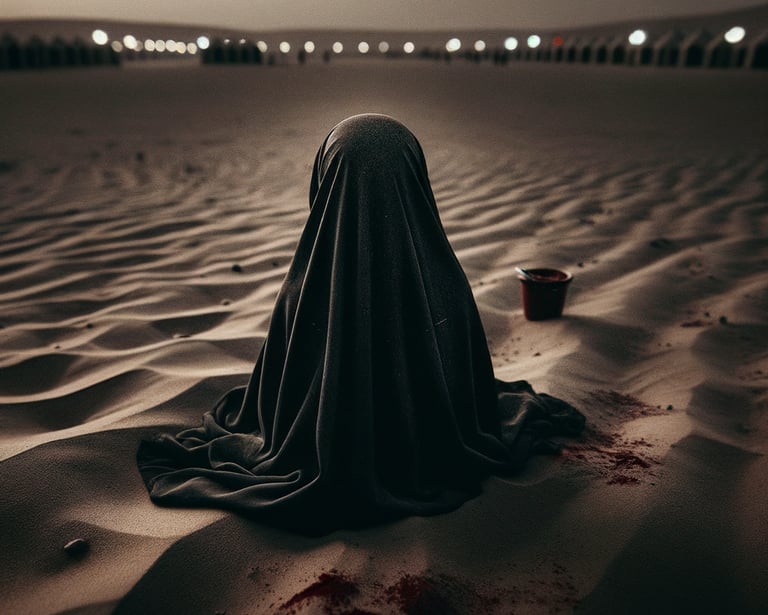
No water was to reach Hussain’s رضي الله عنه camp. Days passed under the scorching desert sun. The cries of thirsty children rose from the tents.
The Euphrates River flowed nearby… yet remained unreachable. Little Sakina, the young daughter of Hussain رضي الله عنه, wandered among the tents asking for water. Her innocent voice pierced the hearts of the exhausted camp.
The suffering inside the camp grew heavier with each passing hour.
Yet Hussain رضي الله عنه did not surrender.
On the night before the final battle, he gathered his companions and spoke softly to them. He told them darkness had hidden the camp. Whoever wished to leave could leave freely.
No one moved.
One by one, his companions stood and pledged loyalty. Not for power. Not for wealth. But for faith, honor, and love.
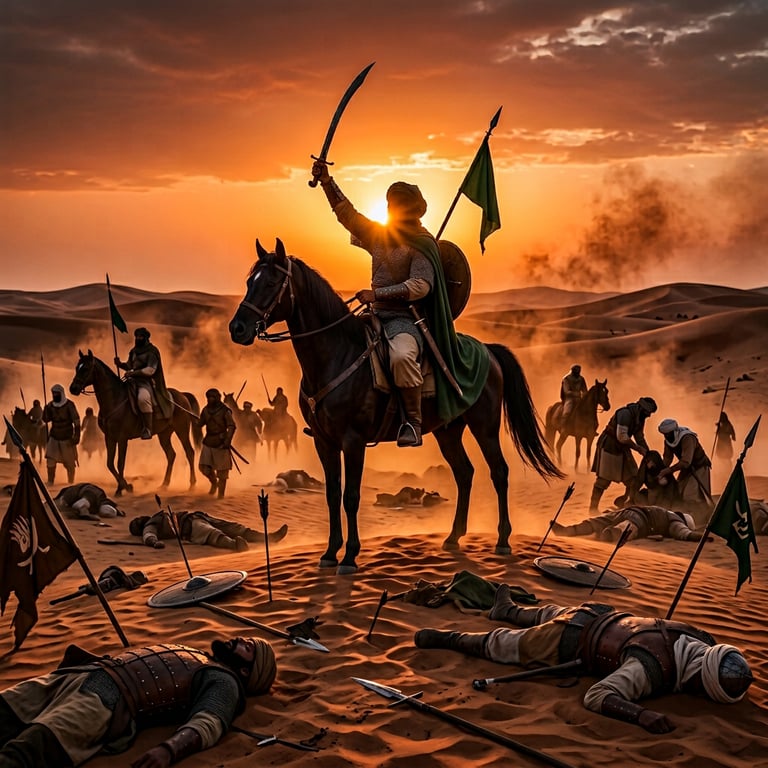
Then came the morning of Ashura. The desert wind carried silence across Karbala. One by one, Hussain’s companions entered the battlefield and fell. Fathers. Sons. Friends. Men who knew they would never return.
Among the most painful moments was the martyrdom of Abbas رضي الله عنه. As the cries of thirsty children echoed through the camp, Abbas رضي الله عنه rode toward the river to bring water back for Sakina and the others. He reached the water… yet before drinking himself, he remembered the thirst of Hussain’s camp. But on his return, he was surrounded. His arms were severed. The water skin fell. And Abbas رضي الله عنه was martyred before reaching the tents. When the news reached the camp, grief spread like fire through broken hearts.
Then came the unbearable final hours. Even Ali Asghar — the infant son of Hussain رضي الله عنه — was not spared from suffering. As Hussain رضي الله عنه held the child in his arms asking only for water, tragedy struck again upon the scorching sands.
At last, Hussain رضي الله عنه himself entered the battlefield.
Alone. Exhausted. Wounded. Yet unbroken.
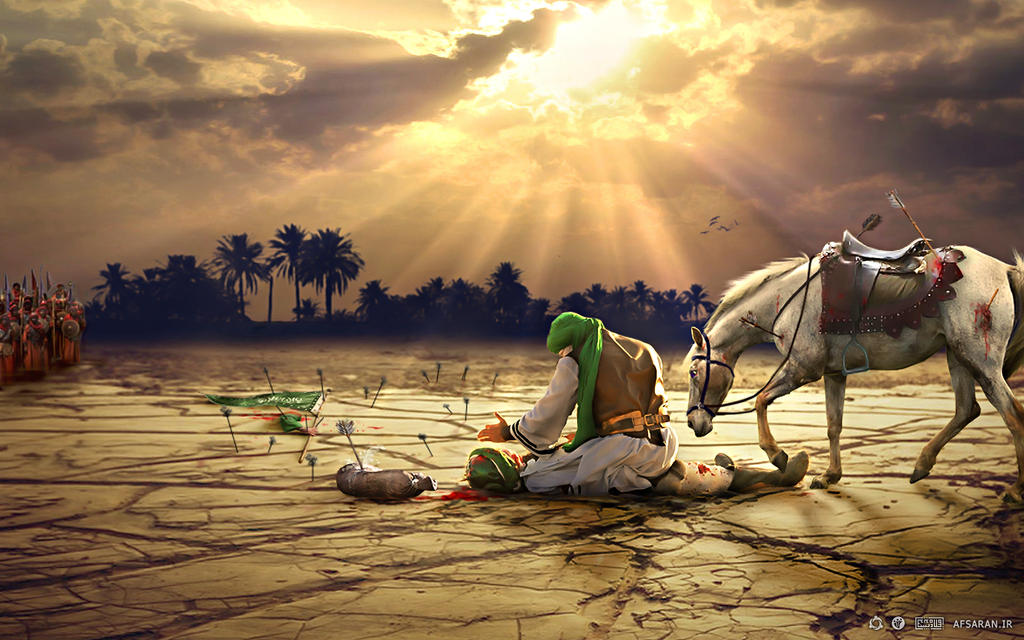
Before him stood soldiers of an empire. Behind him stood only the memory of the Prophet ﷺ and the cries of his family. Then the grandson of Prophet Muhammad ﷺ fell upon the sands of Karbala.
The desert grew silent. But the tragedy had not yet ended. The tents were attacked. Fires spread through the camp. The surviving women and children witnessed unbearable grief. The body of Hussain رضي الله عنه was left upon the battlefield, wounded and desecrated by hatred and vengeance.
And then began another painful journey.
The surviving members of the Prophet’s family — including Zainab bint Ali رضي الله عنها, the courageous sister of Hussain رضي الله عنه, and the ill young Ali ibn Hussain, later known as Zain ul Abideen — were taken captive.
From Karbala to Kufa… and then toward the court of Yazid in Damascus. Chains could restrain bodies…but not dignity.
In the courts of power, Zainab رضي الله عنها stood with remarkable courage. Her words carried the pain of Karbala into the heart of the empire itself. The tragedy that rulers hoped to silence instead spread across generations.
Karbala became more than a battle.
It became a symbol. For Muslims, it became the story of standing for truth even when defeat seems certain. For many Sunnis, it remained a heartbreaking tragedy involving the beloved family of the Prophet ﷺ. For many Shias, it became the center of spiritual grief and remembrance.
And even beyond Islam, people across cultures would later see in Karbala a universal message:
That moral courage is sometimes greater than worldly victory. That sacrifice can outlive empires. That truth spoken by the weak can shake the conscience of history.
The Umayyad Empire continued politically after Karbala. But spiritually, something had changed forever.
The tears of Karbala would travel through centuries…
through sermons…
through poetry…
through hearts…
from Arabia to Persia…
from Central Asia to India…
from mosques to homes…
until the memory of Hussain ibn Ali رضي الله عنه became one of the most enduring symbols of sacrifice in human history.
And while grief still lingered over the Muslim world, a new phase of power was beginning to rise.
Soon, Abdul Malik ibn Marwan would emerge to rebuild the fractured empire and transform the Islamic world into a centralized civilization unlike anything Arabia had seen before.
For many Muslims, The incident of Karbala symbolized the eternal struggle between power and moral conscience… between authority and sacrifice… between worldly control and spiritual truth.
Yet despite the horror of Karbala, the lineage of the Prophet ﷺ did not end there.
Among the survivors was Ali ibn Hussain, later known as Zain ul Abideen — a quiet and deeply spiritual man who had been too ill to fight during the battle.
Through him, the family line of Hussain رضي الله عنه continued into future generations.
Across centuries, descendants of the Prophet ﷺ would appear in different lands, different dynasties, and different spiritual movements throughout the Muslim world — including parts of Persia, Central Asia, the Indian subcontinent, and the Ottoman era.
The Muslim world had survived civil war… but spiritually, something had changed forever.
And as the Umayyad rulers tightened their control over the empire, new leaders would soon emerge who would reshape Islamic civilization once again.
Among them would rise a ruler named Abdul Malik ibn Marwan, a man who would rebuild the empire after chaos and transform it into one of the greatest powers of its age.
End of Chapter 5