Chapter 6: Abbasids—The Golden Dawn
Under the Abbasids, the capital soon shifted from Damascus to Baghdad, a new city founded by Caliph Al-Mansur. It became a magnificent center of culture and wisdom, attracting scholars, poets, traders, and travelers from every corner of the earth.
THE BRIEF HISTORY OF ISLAM!
Danish Shafiq
6/18/20264 min read
Chapter 6: Abbasids—The Golden Dawn
In a hidden corner of Persia, beneath a dark, starlit sky, a secret meeting was underway. Abbasid supporters gathered around a small fire, their faces illuminated by flickering flames. They spoke in low voices, cautious and determined, plotting how they would topple the Umayyads, whose extravagance had alienated so many Muslims.
“We cannot endure their tyranny any longer,” whispered Abu Muslim, the charismatic Persian leader whose fierce eyes glowed with determination. “The Umayyads have betrayed the Prophet’s path. We must reclaim justice and true Islam.”
Abu Muslim was young, passionate, and persuasive. He had quietly unified Arabs, Persians, and Turks—people who had grown tired of the Umayyad rulers’ lavish lifestyle and their distance from Islam’s humble beginnings.
As he spoke, the flames danced higher, reflecting determination in the eyes of those around him. This small gathering would soon spark a revolution.
The Black Banners Rise!
It began quietly, with Abbasid followers secretly spreading their message across the empire. Soon, whispers turned into open rebellion. Abbasid armies marched under black banners, symbolizing justice and change. From village to village, city to city, their message ignited hearts, gathering more followers every day.
At the decisive Battle of the Zab River, Abbasid troops faced the mighty Umayyad army. Soldiers stood shoulder to shoulder, waiting nervously, yet confident in their cause. As the battle commenced, swords clashed, arrows filled the sky, and the ground shook beneath charging horses. Hours passed like seconds, the battle fierce and relentless. But slowly, the Umayyad lines began to crumble.
Victory belonged to the Abbasids. Soon, news spread rapidly, reaching Damascus itself. The Umayyad empire fell, their rulers fleeing or killed, leaving the path clear for Abbasid triumph.
A New Caliph, A New Hope!
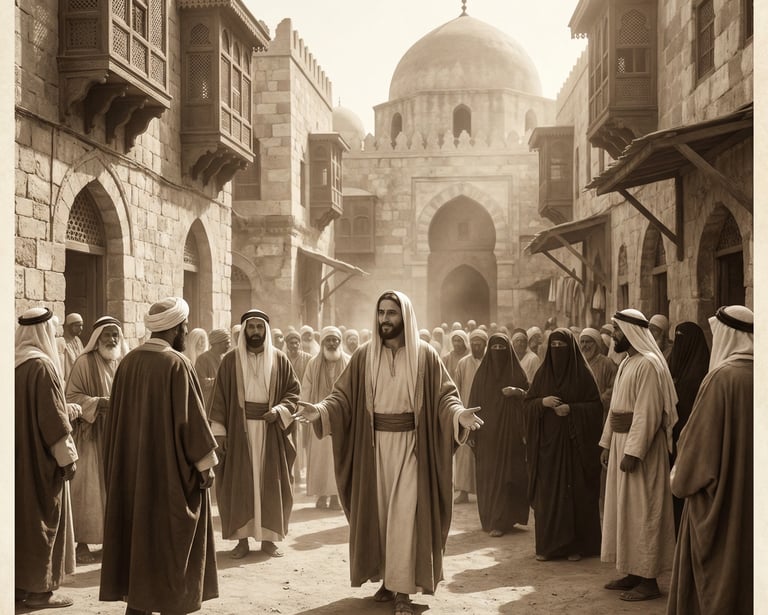
In the bustling city of Kufa, crowds gathered eagerly, their hearts filled with hope. Abu al-Abbas, known as Al-Saffah—the generous—stepped onto a raised platform, eyes bright, voice steady.
“Today begins a new dawn,” he declared to a cheering crowd. “Justice and equality shall once again guide Islam!”
Under the Abbasids, the capital soon shifted from Damascus to Baghdad, a new city founded by Caliph Al-Mansur. It became a magnificent center of culture and wisdom, attracting scholars, poets, traders, and travelers from every corner of the earth.
Baghdad—The Jewel of the World!
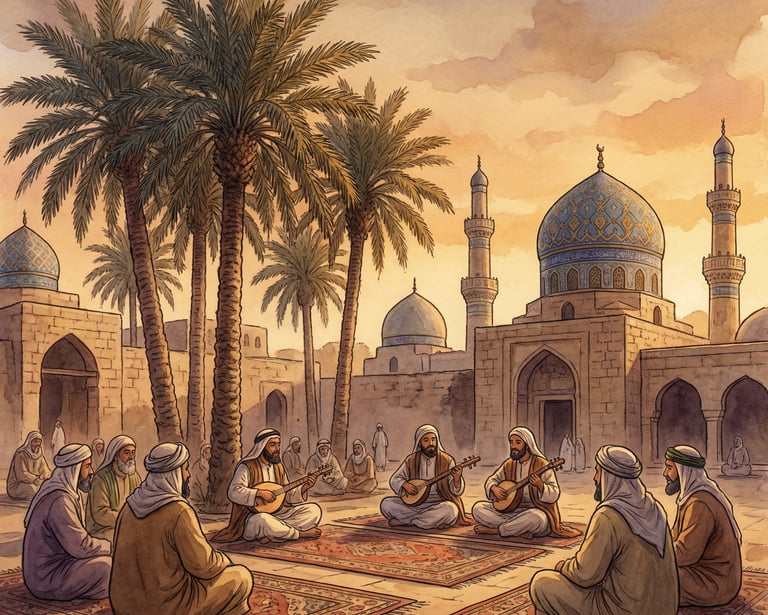
In Baghdad, streets buzzed with life and excitement. Golden palaces rose along the banks of the mighty Tigris River. Gardens bloomed brilliantly, filled with fountains, musicians, poets, and philosophers who debated under starlit skies. Baghdad quickly became the heart of knowledge and wisdom in the world, a city of dreams and possibilities.
Caliph Harun al-Rashid ruled at Baghdad’s peak. Tall, dignified, and fair, Harun would disguise himself at night, walking among his people anonymously, understanding their struggles firsthand. Many loved him for his generosity and wisdom, and his reign became legendary—immortalized in stories like the "Arabian Nights."
A Golden Age of Learning!
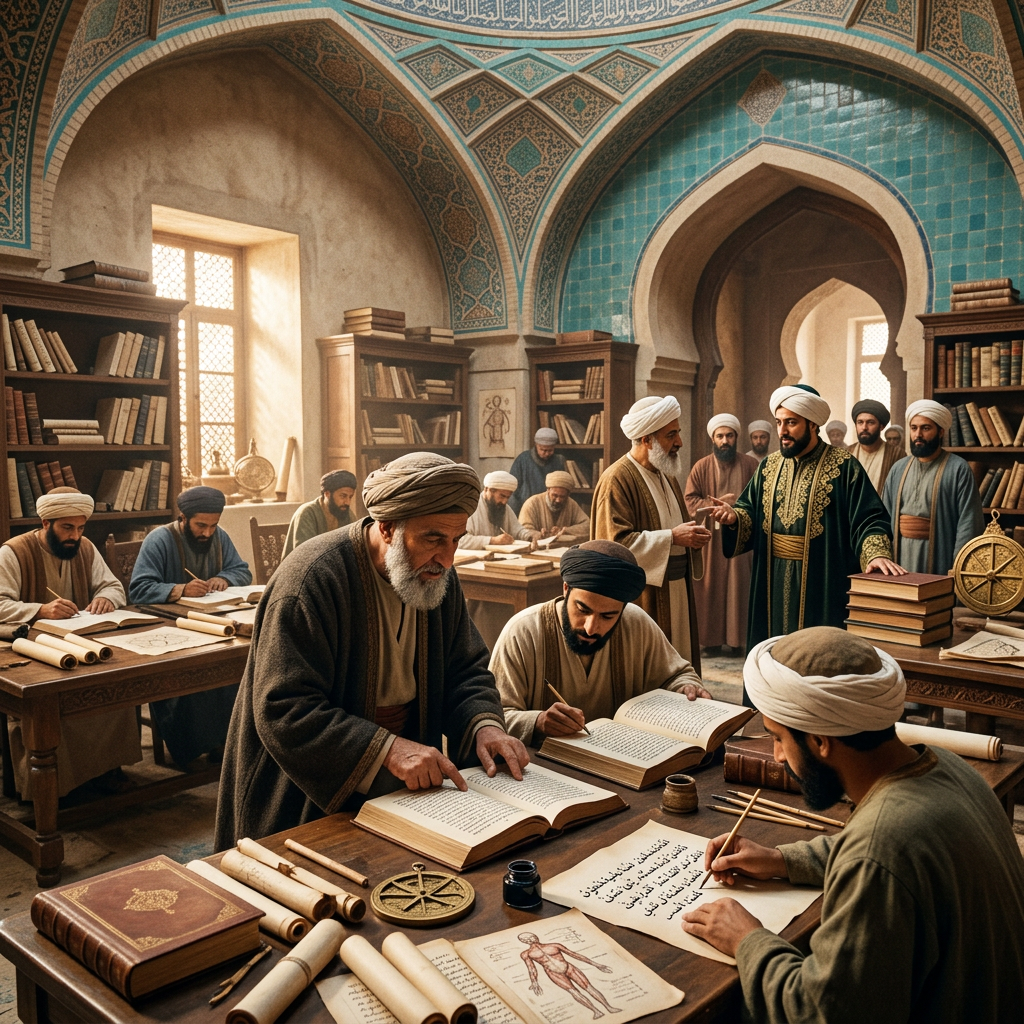
Under Abbasid rule, Islamic civilization blossomed like never before. In Baghdad’s House of Wisdom, scholars from many lands—Arab, Persian, Greek, Indian, Jewish, and Christian—gathered to translate ancient texts, debate philosophies, and discover new sciences. Mathematics flourished, astronomy reached new heights, and medicine saw breakthroughs that saved countless lives.
Scholars like Ibn Sina and Al-Khwarizmi became legendary, their discoveries reshaping human understanding for generations to come. This golden era of knowledge, science, and culture forever shaped human history.
Yet amid all this brilliance, the empire faced hidden dangers. Rivalries simmered beneath the grandeur, quietly weakening the empire’s foundation. The Abbasids soon depended heavily on foreign soldiers, Turks in particular, whose loyalty grew uncertain.
Troubles Within!
As the empire grew wealthy, corruption seeped in. Luxury replaced simplicity, extravagance overshadowed humility. Many caliphs became mere figureheads, their power taken by powerful viziers, generals, or palace guards. Baghdad still sparkled from the outside, but inside, it slowly decayed.
Faraway provinces broke free, declaring their independence. Andalusia, Egypt, and Persia distanced themselves. Unity became fragile. People wondered silently, sensing the approaching storm, yet hoping it would pass.
Mongol Shadows on the Horizon!
Meanwhile, far to the east, an even greater danger loomed unseen, brewing quietly beneath distant steppes. In lands unknown to Baghdad’s scholars, a fierce warrior named Genghis Khan had united warring Mongol tribes into a powerful, unstoppable force. His warriors would soon ride westward, bringing chaos, destruction, and unimaginable pain to the lands of Islam.
In Baghdad, unaware of this distant storm, life continued blissfully unaware. Music filled courtyards, scholars debated in peace, and merchants traveled safely under Abbasid protection. Yet the clock of destiny quietly ticked onward, counting down toward a day no one foresaw—a day when the glorious city of Baghdad would face the greatest disaster in its history.
For now, Baghdad thrived, unaware of the storm approaching from afar. But history had begun turning silently, fate preparing a collision that would reshape Islam’s story forever.
(End of Chapter 6)