Chapter 7: Genghis Khan – The Rising Storm from the East
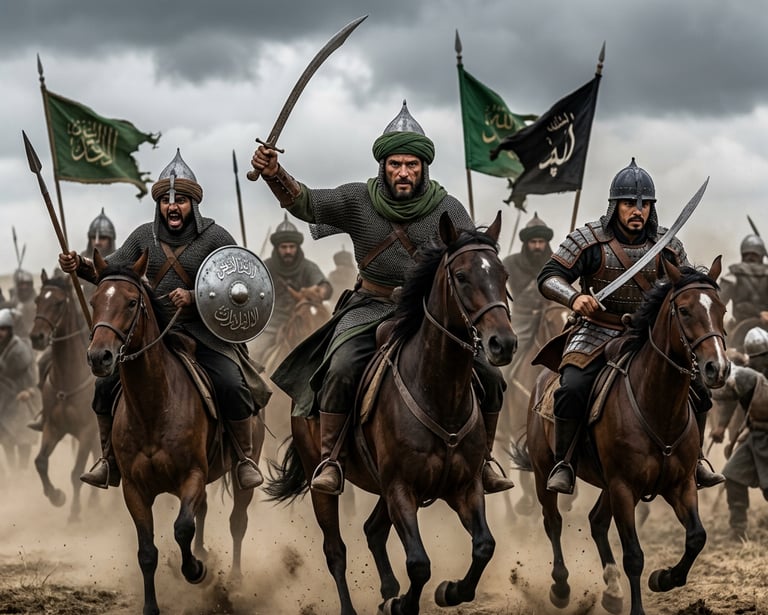
Genghis Khan's armies swept across Central Asia like a merciless storm. Cities fell swiftly, one after another. The Khwarezmid Empire, once wealthy and powerful, crumbled under the ferocity of Mongol attacks. Entire cities were reduced to ashes, their proud walls toppled to rubble.
THE BRIEF HISTORY OF ISLAM!
Danish Shafiq
6/18/20264 min read
Chapter 7: Genghis Khan – The Rising Storm from the East
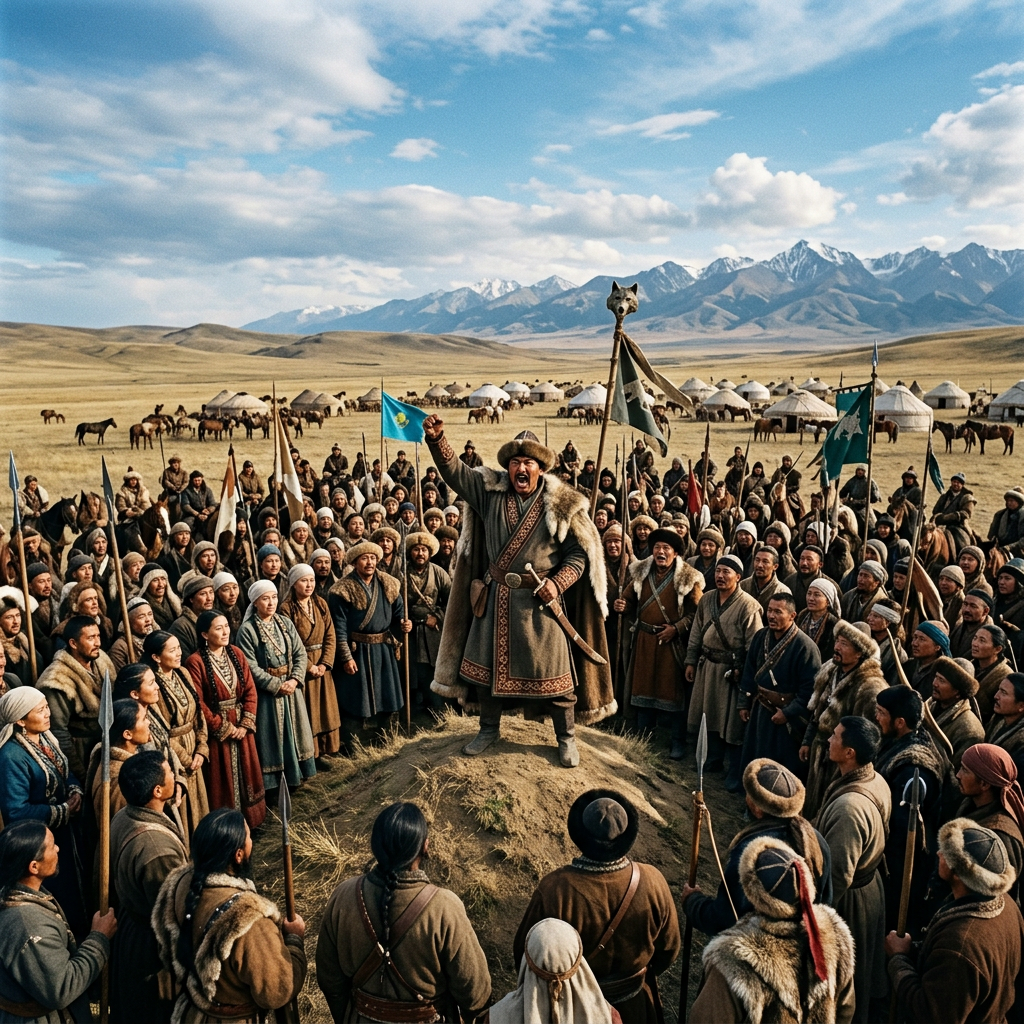
Far beyond Baghdad’s magnificent palaces and vibrant bazaars, beneath vast skies and endless grasslands, a storm was quietly rising. In the cold, harsh steppes of Mongolia, fierce tribes roamed freely, locked in constant rivalry and warfare. Among these scattered tribes, in a small, humble tent, a boy named Temujin was born. Few knew that this child, born into poverty and hardship, would someday shake the very foundations of the world.
Temujin’s early life was anything but easy. His father was murdered when he was young, plunging his family into poverty and exile. Yet suffering hardened his spirit. Temujin grew tough, courageous, and determined. His eyes burned with an ambition to unite the tribes, to end generations of violence and chaos, and create something powerful and lasting.
From Temujin to Genghis Khan!
As he grew older, Temujin's strength and wisdom attracted warriors and friends alike. Tribesmen soon pledged loyalty, drawn by his vision and unmatched bravery. Through battles, alliances, and cunning strategies, Temujin united tribe after tribe, each victory strengthening him further. Finally, in a grand gathering beneath the open sky, the Mongol leaders named him “Genghis Khan”—meaning “Universal Ruler.”
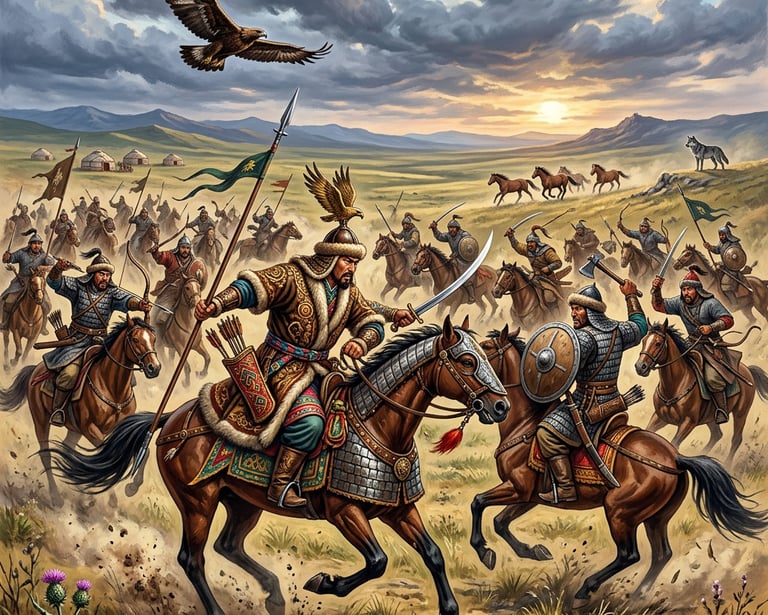
Under this new name, his armies began to move outward swiftly, conquering lands far beyond the steppe. Riding swift horses and carrying powerful bows, the Mongol warriors seemed unstoppable. With each victory, Genghis Khan's empire stretched wider, reaching toward distant lands that had never before heard his name.
A New Enemy Approaches Islam!
Soon, Mongol eyes turned westward, toward the powerful Khwarezmid Empire, a great Islamic kingdom stretching across Central Asia and Persia. At first, Genghis Khan offered peaceful trade. He sent ambassadors bearing gifts, hoping to establish friendly relations.
But the proud Khwarezmid Sultan, Muhammad II, arrogantly rejected Genghis Khan’s offer. Tragically, he executed the Mongol envoys—a grave mistake that ignited Genghis Khan’s wrath. Furious, the Khan gathered his warriors, sending a chilling message westward: “I am coming.”
The Storm Unleashed!
Genghis Khan's armies swept across Central Asia like a merciless storm. Cities fell swiftly, one after another. The Khwarezmid Empire, once wealthy and powerful, crumbled under the ferocity of Mongol attacks. Entire cities were reduced to ashes, their proud walls toppled to rubble. Genghis Khan made clear his merciless rule—any city that resisted would face destruction; those surrendering peacefully might be spared.
Terrified refugees fled westward, bringing terrifying tales of Mongol brutality and destruction. Islamic scholars and merchants watched helplessly as their great libraries, markets, and palaces burned to the ground. Central Asia’s magnificent cities—Bukhara, Samarkand, Nishapur—collapsed beneath Mongol arrows and swords.
Yet despite their brutality, the Mongols admired bravery. They spared artisans, craftsmen, and scholars who surrendered, bringing these talented people back to Mongolia to enrich their empire. Ironically, many Mongols, through contact with conquered Muslims, slowly began learning about Islam.
Baghdad – Jewel of Islam!
Years passed, and Genghis Khan died, but his successors carried his legacy forward. In 1258, the most feared Mongol leader yet—Hulagu Khan—turned his eyes toward the Abbasid Caliphate, with its shining capital, Baghdad.
Baghdad stood as the jewel of Islam, wealthy beyond imagination, renowned globally as the center of learning and culture. Its libraries contained centuries of human wisdom; its wealth and beauty unmatched. Caliph Al-Musta'sim, however, ignored the growing danger. Advisors warned him desperately, begging him to prepare for battle, but the Caliph believed Baghdad’s glory alone could withstand any assault.
He was tragically mistaken.
The Fall of Baghdad!
Mongol drums echoed across the Tigris River as Hulagu Khan’s army approached. Hulagu demanded Baghdad’s surrender, promising mercy if the city obeyed peacefully. Proudly, Al-Musta'sim refused, trusting in Baghdad’s walls and history.
The siege began. Thousands of Mongol warriors surrounded Baghdad, unleashing arrows and hurling massive stones. After days of fierce fighting, the walls collapsed, and Hulagu’s forces stormed inside. Chaos erupted—books, treasures, palaces, and mosques burned uncontrollably. The Tigris ran black with ink from destroyed libraries, then red with blood. Hulagu showed little mercy; thousands perished, including scholars, poets, men, women, and children.
The Caliph himself was captured, brought trembling before Hulagu. The conqueror spoke coldly, "You hoarded treasures that could have saved your people, and now they die hungry." Al-Musta'sim pleaded weakly for mercy, but Hulagu's heart was cold, his decision final. The last Abbasid Caliph was executed, marking the bitter end of an era.
Baghdad, the city of dreams, wisdom, and power, was no more.
Islamic Dynasty Faces the Abyss!
The fall of Baghdad sent shockwaves across the entire Muslim world. People mourned deeply, fearing Islam itself faced destruction. How could faith survive such devastation? Scholars wondered, poets lamented, and ordinary people wept bitterly, their spirits broken.
Yet, unseen by all, even amid ruin and despair, hope began quietly sprouting. From the ashes and dust, Islam would find strength again, transforming conquerors themselves into believers.
The Mongols had shattered the Abbasids, but within their hearts, something extraordinary would soon occur—something that would reshape Islam and rewrite history yet again.
(End of Chapter 7)